Showing posts with label elearning. Show all posts

Wednesday, 22 August 2018

Discover e-Learning Standards & it’s Advantages

e-Learning is expanding its wings rapidly in the current education system. e-Learning is an affordable solution that provides students with the ability to learn in their Comfort Zone and make their schedules efficiently.
It is the delivery of a learning, training or education program ONLINE, or on an e-Learning Platform is e-Learning.

The process or structure of e-Learning in the diagram below.
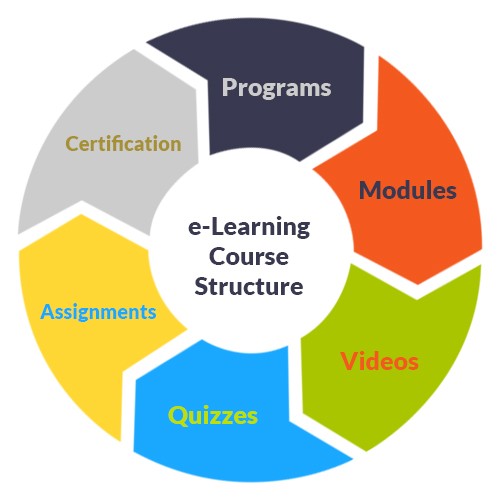

structure of elearning

Check e-Learning Standards-

The resolution of e-Learning depends upon the successful movement of existing pedagogically sounds of courses elements into the e-Learning structure. Thus, the standards are interpreted in the diagram below:
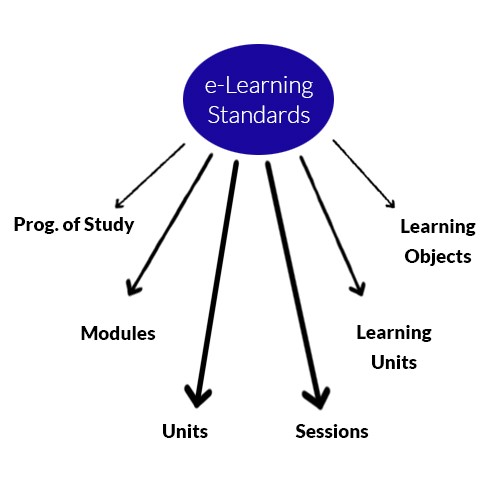
elearning Standards
elearning Standards

In the conventional face-to-face teaching process, the module gets divided into 20 hours of lectures, additional activities, and evaluation. In e-learning environment the concept of a “lecture,” is unavailable and it is to be moved to place lecture notes online, or to compose an e-lecture, we surely shouldn’t be looking at 1 hour of delivery of such materials.
It is essential to understand the course materials and re-engineer them within proper sessions which get created from Learning Units. A Learning Unit is an exercise, i.e., reading, listening, assessing, writing, etc. where each Learning Unit is no longer than 20 minutes of online activity.
A Learning Unit contains:
  • learning content,
  • evaluation,
  • resource study
  • or communication.

Let’s check out the Advantages of e-Learning-       

Advantages of e-Learning include that it can be:

  • The best A4 of e-Learning – Anytime, Any Place, Any Pace, Any Subject: e-Learning elements can be accessed at the most comfortable time for the learning if the course matter is well created then learning can take place in small sections and can be customized to suit the learner’s requirements.
  • Empowerment: Students are in charge of their learning.
  • Versatility: e-Learning element can be accessed in a non-sequential way, empowering students to navigate content in various ways, or gain a global view before taking the details of individual members.
  • Cost Efficient: vast numbers of learners can have access to the same stuff but can be held by peer-to-peer or student-to-tutor support assistance thus it reduces the cost of delivery.
  • Up-to-date Content: Course content is found in one place so it can be quickly updated and can present direct links to supporting materials such as Internet and library sources.
  • Tailored Education: the time required to learn a singular topic or skill is decreased or “compressed” as learning can be changed to suit the user’s demands and requirements. E-learning can give a variety of learning activities including interactive components.
  • Socio-inclusive: learners can learn in a comparatively unknown environment without the embarrassment of failure and socio-cultural bias from personal communication.
  • Consistent: all learners get the same standardized set of study materials from e-learning.
  • Interactive: well-constructed study materials will have elements of interactivity through simulations etc. which will implement the learning.
  • Collaborative: The performance of groups and teams working together in collaborative learning and learner-learner communication enforces employability skills.
  • Applied To Track Student Performance: student practice of the materials is monitored, and initial potential drop-out can be identified and given corrective support.
  • Used to Facilitate knowledge: The understanding of ideas by suggesting alternative methods of visualizing documents and alternative solutions to those provided in a single delivery mode such as a lecture, seminar or tutorial.

For example- Multimedia and hypermedia.
  • Get Instant feedback: Get Quick reply from online self-assessment or moldable assessment mainly through MCQs, i.e., multiple choice question formats.
  • Self Assessment: learners can be extended automatically-marked self-assessment activities to identify skill/knowledge levels and learning requirements before joining with course content.
  • To assist students with specific Disabilities: Introduction for students with hearing and some physical disabilities may heighten.

Sunday, 5 August 2018

NIBT Launched an e-Learning Platform for all our Enthusiastic Learners!

NIBT-National Institute of Building Technology is India’s leading Institute that creates opportunities for young talent in the Construction Industry!
NIBT provide training on various construction management courses, Advanced BIM Technology, GIS courses, with 100% job Assistance in MNCs.
Thus, on our students demand and market research, NIBT takes pride to announce that it has launched its e-Learning Platform for students who want to learn on the fly.
Now you can avail hands-on experience of Learning Career-oriented courses ONLINE, and also Virtual Class training on the e-Learning Portal, and achieve your goals.
A platform where your dreams meet reality, where you can learn anytime, anywhere and achieve your aims.
Do you know what e-Learning is? Have you ever search for eLearning sites? Let’s take a look at e-Learning, how it is valuable in the modernized education system.
eLearning portal
eLearning 

What is e-Learning?

Understanding e-Learning is simple. eLearning is learning that uses electronic technologies to access the educational curriculum outside a traditional classroom. In many cases, it refers to a course, program or degree delivered entirely online.
The delivery of a learning, training or education program ONLINE, or on an e-Learning Platform is e-Learning. E-learning involves the use of a computer or electronic device (e.g., a mobile phone) in some way to provide training, educational or learning material.

Now let’s discuss what an e-Learning platform is?

A Learning Platform is a collection of interactive online services that provide teachers, learners, parents and others engage in education with knowledge, tools, and resources to encourage and enhance educational delivery and management.
An e-Learning Platform is a complete system facilitating secure, web-based educational training and e-learning solutions that adopt a simple and intuitive user interface.

Check the concept of e-learning and what benefits it delivers-

The concept of e-Learning is expanding its wings rapidly in the current education system. Earlier, e-Learning was not accepted positively, and therefore it assumed that such type of education lacked human impact in learning.
However, with the rapid progressions in technology and education systems, e-Learning is now embraced by the young generation and masses across the world.
With the introduction of computers, the e-Learning revolution also got a grip, and with the passage of time, and the revolution has spread amongst the students. As we get hooked on modern generation devices like smart-phones, tablets, the textbooks have been replaced by electronic education materials in the blink of an eye. And, as a result, knowledge sharing is now done through the Internet, which is accessible 24/7 365 days a year, anytime, anywhere!
e-Learning is an affordable solution that provides students with the ability to learn in their Comfort Zone and make their schedules efficiently.
It also enables students with several benefits. Read More..

 Let’s check out few spectacular eLearning benefits, take a look!-

  • Cost-efficient,
  • On-Demand access, anytime, anywhere,
  • Standardized experience,
  • Personalized learning,
  • Enhance retention & grasping on the subject.
Thus,  NIBT is bolstering the skill sets of its students with proper understanding. And also creating a hike in their performance providing top-notch job-oriented courses and opportunities. With the upsurge of many multi-national organizations moving towards future building technologies, it is now the right time to learn the expertise in the same arena, and yes, NIBT offers the same!
Hence, discover several Construction Management courses, BIM Technology courses, Photogrammetry in GIS courses and GIS Courses through NIBT’s Online study portal that will undoubtedly benefit the students to enhance their knowledge, achieve their goals, and garner future success.

Wednesday, 7 March 2018

Everything You Need To Know About What is Revit

If you are an architecture student, then surely you must have heard of Autodesk Revit, haven’t you?  Well, the Indian education system is far behind in teaching various updated innovative construction technologies as compared to the U.S. standards. Agree? Being an engineering student, you must have heard Autodesk Revit but do you know the actual implementation of it? What is Revit? What are its benefits in construction?
Merely learning Revit won’t make you an Architect. During the engineering course, Revit often taught as an optional subject, but nowadays there is a huge demand of Revit in the construction sector. While various job listings and internships are asking for Revit. NIBT truly understands the need for an hour and has launched eLearning portal that teaches every single construction management technologies. And therefore Learning Revit with NIBT is no longer optional for the Engineering students. Let’s start with What is Revit? Check out our detailed article.

What is Revit?


Let us start with Basics of Revit.
Revit is a computer software mainly used to design buildings mechanical parts and also many other designs based on Civil, Mechanical and Electrical engineering. Autodesk Revit Architecture is a comprehensive architectural design and also documentation software application created by Autodesk for architects and building experts.
In a very simple language, Revit is a tool used for 3D modeling visualization. Using the Revit software, you can create a virtual building design with all its properties. Just like a real building but in the virtual world!

Why Learn Revit?

By far, you must have understood what Revit is? Now let’s see the benefits of learning Revit.
With the advent of BIM (Building Information Modeling) in the modern construction sector, the construction industry has benefitted a lot regarding delivering quality and clash-free projects. Also, the projects are more productive and cost-efficient. Learning Revit and other new software certainly boost the project performance qualitatively and quantitatively.

Check out what Revit is?

Revit is not BIM, but its built for BIM. It is a software for BIM which helps designers design, simulate, visualize, coordinate and collaborate to capitalize on the benefits of the interconnected data within a BIM Model.
Advantages of Learning RevitIt is a software for BIM which helps designers design, simulate, visualize, coordinate and collaborate to capitalize on the benefits of the interconnected data within a BIM Model.

Gain exposure to BIM
Revit built for BIM; it is a software used in the entire BIM process. Learn Revit now, and you will gain confidence in manipulating the data with a BIM model and learn how the changes you make to one object in a model reflects automatically throughout the design. Learn Revit to boost your confidence.
Learn Revit Design skills that make you more valuable
Learning implementation of Revit with project-based Revit tutorials will not only give you real-world experiences but also creates digital drawings, 3D models, and other details. You will also learn the various design skills like floor design, walls, windows & doors plan, quantity take-off, scheduling, project cost-estimation and finally a 3D view of the project. Hence, These new design skills will allow you to apply your knowledge skills and set you apart from fellow interns.
Enhance your presentation skills
Once you gain confidence in learning designs and implementing it on the project, you will undoubtedly enhance your presentation skills with professional looking elevations, renders, and visualizations. Also, you will able to showcase your work confidently.

Who can learn Revit?

Architectures, Engineering students or the construction professionals in architecture, consulting and also construction firms who want to think of better careers and willing to upgrade their skill sets can also learn Revit.

Learning Objectives

  • Understanding basics of Revit.
  • Creation of the primary parametric family by using Revit
  • Learning the Basic Editing Tools.
  • How to start and set up new Project in Revit.
  • Learning the Basic Revit MEP and architectural commands.

Categories of Revit

Revit is vast and varied in its scope. Fundamentally Revit can categorize into six division based on various trades:
Learn many design skills like designing of walls, floor plans, door plans, cost-estimation and quantity takeoff can learned in Revit Architecture.
Everything related to the designing of columns & beams of a building can be learned in Revit Structure.
The overall Heating, ventilation and Air Conditioning of a building, have various tools, Duct types, spooling drawing can also learned in this category.
The use and implementation of conduits, cable tray, electrical panels & circuiting are learned in Electrical
Fixing of various fire alarms, sprinklers in building security etc. can determined in Revit for Fire Protection (FP)
The different types of pipes used in building, materials, fitting & fixtures, Domestic pipes, venting systems and DWV pipe system can also learned in this category.

 Revit Training with NIBT eLearning

National Institute of Building Technology’s eLearning platform not only brings eLearning courses but also covers entire Revit categories from basics to advance in construction management. We are also introducing Revit training that will make online training interactive and entertaining. We have taken care that the learner with us is always in a flow to learn and never gets stuck-up/or feels boring anywhere and certainly gain detailed knowledge of what is Revit.
Let’s get to know what is Revit, its uses, benefits, and its working in a very simplified way only at NIBT!
The Revit tutorials introduce here is crisp and presented impressively, easy to understand and implement.
Sounds Interesting?

Tuesday, 26 December 2017

Everything You Need To Know About What is Revit

If you are an architecture student, then surely you must have heard of Autodesk Revit, haven’t you?  Well, the Indian education system is far behind in teaching various updated innovative construction technologies as compared to the U.S. standards. Agree? Being an engineering student, you must have heard Autodesk Revit but do you know the actual implementation of it? What is Revit? What are its benefits in construction? Merely learning Revit won’t make you an Architect. During the engineering course, Revit is often taught as an optional subject, but nowadays there is a huge demand of Revit in the construction sector. Various job listings and internships are asking for Revit. NIBT truly understands the need for an hour and has launched eLearning portal that teaches every single construction management technologies. Learning Revit with NIBT is no longer optional for the Engineering students. Let’s get started with What is Revit? Check out our detailed article.


Let’s get started with Basics of Revit.
Revit is a computer software mainly used to design buildings mechanical parts and many other designs based on Civil, Mechanical and Electrical engineering. Autodesk Revit Architecture is a comprehensive architectural design and documentation software application created by Autodesk for architects and building experts.
In a very simple language, Revit is a tool used for 3D modeling visualization. Using the Revit software, you can create a virtual building design with all its properties. Just like a real building but in the virtual world!

Why Learn Revit?

By far, you must have understood what Revit is? Now let’s see the benefits of learning Revit.
With the advent of BIM (Building Information Modeling) in the modern construction sector, the construction industry has benefitted a lot regarding delivering quality and clash-free projects. Also, the projects are more productive and cost-efficient. Learning Revit and other new software certainly boost the project performance qualitatively and quantitatively.

Check out what Revit is?

Revit is not BIM, but it is built for BIM. It is a software for BIM which helps designers design, simulate, visualize, coordinate and collaborate to capitalize on the benefits of the interconnected data within a BIM Model.

Advantages of Learning Revit


 Gain exposure to BIM

Revit is built for BIM; it is a software used in the entire BIM process. Learn Revit now, and you will gain confidence in manipulating the data with a BIM model and learn how the changes you make to one object in a model reflects automatically throughout the design. Learn Revit to boost your confidence.

Learn Revit Design skills that make you more valuable

Learning implementation of Revit with project-based Revit tutorials will give you real-world experience creating digital drawings, 3D models, and other details. You will learn the various design skills like floor design, walls, windows & doors plan, quantity take-off, scheduling, project cost-estimation and finally a 3D view of the project. These new design skills will allow you to apply your knowledge skills and set you apart from fellow interns.

Enhance your presentation skills

Once you gain confidence in learning designs and implementing it on the project, you will undoubtedly enhance your presentation skills with professional looking elevations, renders, and visualizations. Also, you will able to showcase your work confidently.

Who can learn Revit?

Architectures, Engineering students or the construction professionals in architecture, consulting and construction firms who want to think of better careers and willing to upgrade their skill sets can learn Revit.

Learning Objectives

  • Understanding basics of Revit.
  • Creation of the primary parametric family by using Revit
  • Learning the Basic Editing Tools.
  • How to start and set up new Project in Revit.
  • Learning the Basic Revit MEP and architectural commands.

Categories of Revit

Revit is vast and varied in its scope. Fundamentally Revit is categorized into six division based on various trades:
1. Revit for Architecture
Learn many design skills like designing of walls, floor plans, door plans, cost-estimation and quantity takeoff can be learned in Revit Architecture.
2. Revit for Structure
Everything related to the designing of columns & beams of a building can be learned in Revit Structure.
3. Revit for HVAC (Mechanical)
The overall Heating, ventilation and Air Conditioning of a building, various tools, Duct types, spooling drawing can be learned in this category.
4. Revit for Electrical
The use and implementation of conduits, cable tray, electrical panels & circuiting are learned in Electrical
5. Revit for Fire-Protection
Fixing of various fire alarms, sprinklers in building security etc. can be determined in Revit for Fire Protection (FP)
6. Revit for Plumbing
The different types of pipes used in building, materials, fitting & fixtures, Domestic pipes, venting systems and DWV pipe system can be learned in this category.

Revit Training with NIBT eLearning

National Institute of Building Technology’s eLearning platform brings eLearning courses covering entire Revit categories from basics to advance in construction management. We are introducing Revit training that will make online training interactive and entertaining. We have taken care that the learner with us is always in a flow to learn and never gets stuck-up/or feels boring anywhere and certainly gain detailed knowledge of what is Revit.
Let’s get to know what is Revit, its uses, benefits, and its working in a very simplified way only at NIBT!
The Revit tutorials taught here are crisp and are presented impressively, easy to understand and implement.
Sounds Interesting?
Click here to know more and JOIN us in an innovative revolution!