Tuesday, 26 December 2017

What is Revit Architecture? A Brief Tutorial For Beginners


Initially, we have learned what Revit is? Its advantages in the construction industry and its various categories. If you have read the last article, you indeed must have nurtured the interest of learning Revit, right? Now, let’s get started with learning the different categories of Revit. are you interested in knowing what is Revit Architecture? Also, how the Revit Architecture creates high-quality, precise architectural designs? If your sole desire is to become a successful architect and if you have the knack for designing or creative mind, here is the brief tutorial on what is Revit Architecture? Have a look!
 
What is Revit Architecture?
Let’s get started with a brief information of what is Revit first. Revit is beyond 3D modeling for visualization where you are creating a virtual building with all its properties. It is just like you build a real building but the work or design is saved on your workstation.

Revit Architecture is a comprehensive design and documentation software application for Architects and construction industry professionals. The app allows you to build real buildings in the virtual world and you can extract any data from it. The plans, the elevations, various sections, different schedule is some data that you can commonly get extracted. In the Revit Architecture software, you can also quickly create color fill, 3D perspective, rendering, detailed drawings and walkthrough animations. With the introduction of BIM in modern construction, you are allowed to communicate your model to other applications as well as trades involved in the project. 

Revit Architecture is also enhancing dynamic information in the models allowing the complicated building structures to be designed and documented in a very short span of time. Each model created with Revit Architecture software represents the complete project and is stored in a single database file.

Revit Architecture Tutorials for Beginners

Looking to jumpstart your income as a Revit Designer? Interested in doing creative designing work in construction field? Or want to upgrade your knowledge in the construction industry? Here is the golden chance to do everything you desire.

The Revit Architecture tutorials for beginners course is one of the extensive, cost-efficient Revit course you will find. NIBT (National Institute of Building Technology) is a one-stop institute for everything related to construction you need to kick start with to get your career graph boosted.
If you are genuinely looking for an efficient course that equips you to build amazingly creative designs and will start earning you better pay and also time-consuming, this is guaranteed to be the course for you.
The course is designed in easy to follow modules starting from basic concepts to advanced applications. Being an eLearning portal, all the courses are in video format. The course is extremely beneficial for the construction professionals to get ahead in the learning curve of Building Information Modeling. BIM is the latest technology gripping the construction industry rapidly in the current scenario where there is an extensive demand for professionals.

Revit Architecture tutorials for beginners teaches students the concepts of BIM and introduces the tools for parametric building design and documentation.

The primary objective of Revit Architecture course:
    To understand basics of Architectural Modeling.
    To learn about Creation of Roofs and Slab Opening.
    To create and modify Curtain Walls.
    To build Stairs and generate Ramps.
    To develop and annotate Construction documents.
    To understand Scheduling, Documentation, and Work-Sharing.

Who can opt for Revit Architecture course:
    Architecture students
    All Engineering students
    Construction Management students
    Real Estate Management students
    Facility Management students
    Structural Engineering students
    Construction consultants
Now, if you are excited to know where you will land after completion of course, below are some potential careers you could consider:

    Revit/BIM Architect
   Architect Draftsman
    Civil Draftsman

NIBT truly understands the power of BIM in future construction world and thus, is actively spreading awareness in the same by launching the eLearning portal. Get to know the various beneficial courses & packages related to BIM. Get started with the basic course, what is Revit Architecture and boost your creative, designer mind in building stunning designs for future buildings.


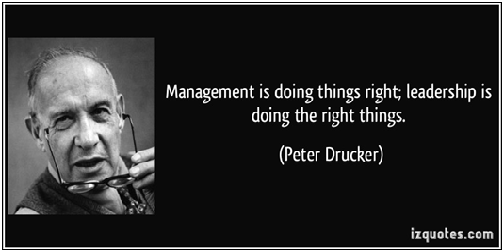
Difference Between Leadership And Management


Minor Difference Between Leadership And Management


Talking of  Managementvs leadership both are complementary and distinctive system of actions. Each has its particular functions. Both of them are significant for the success in a progressively complex and in a volatile environment of the business. Strong leadership with a weak management is not even better than the reverse. The real challenge is to combine strong management and strong leadership and use each one of them so as to balance the other.
Management works by a manager who controls a set or a group of entities so as to accomplish a particular goal. On the other hand, leadership refers to a person’s ability to motivate, influence and enable other people to contribute towards the success of the organization. Inspiration and influence separate leaders from the manager, but not control and power.

 Difference Between Leader And Manager

The main difference between leader and manager is how they motivate people who follow or work for them, and this sets a good tone for most aspects they deal.
The manager mainly;
  •   Solves and controls problems. They keep an eye on the outcomes, detect any variation from the formal plan, and organize projects so as to correct such variations.
  •   Budgets and plans. The tasks of a manager involve setting up of timetables while allocating the needed resources so that there is the execution of the function.
  • Staffs and organizes the organization. He or she sets up a concrete structure to achieve a defined plan, delegate authority for the implementation of a program, creates systems that monitor the performances. They also provide procedures and policies so as to guide the staff.
  • Manager has an authoritative position vested in them by the firm. The style of management is authoritative and transactional, where a manager tells the subordinate what to do.
Thus, the crux of the management is order and predictability so as to achieve short term goals and results for stakeholders, clients and the staff.
In contrast, a leader mainly:
·   Aligns people in such a way that they have a shared mission and vision of the organization. The leader mainly communicates direction so that everyone cooperates, accept, understand and actively act upon the goals of the organization.
·        He or she establishes directions. A leader develops basic strategies and visions for the organization.
·    Inspires and motivates people. A good leader helps each and every individual to overcome barriers to changes, by satisfying the basic human need.
·    He or she leads people based on a charismatic and transformational style. Leaders mainly appeal to people so that people can feel a fulfillment of the heart's desires. Leaders with a charisma that is string find it easier to attract people to some causes. They mainly persuade people by promising a transformational benefit, such that their followers will not only receive the most extrinsic reward but also become better individuals in the society.

The essence of leadership in a firm is changing so as to achieve long-term results such as new markets, and breakthrough products. Management often deals with the status quo of the existing states of affairs while leadership deals with the future position of relations that involves a breakthrough in an organization. Systems and structures are the primary tools manager use while leaders tend to use vision and culture. Overall, the difference between leadership and management is very fine.
Sources
https://www.simplilearn.com/leadership-vs-management-difference-article

Understanding the future of AEC industry in India


This module will help you understand the future of AEC industry in India and make you more informed about the MEP training, the scope that future brings for professionals in construction technologies. Going through this online training course, you will get equipped with the knowledge of RERA that is a necessity for today’s construction enthusiast.


What’s it about?
This module will help you understand the future of AEC industry in India and make you more informed about the scope that future brings for professionals in construction technologies.
The construction sector is the second largest contributor to the India’s GDP (Gross Domestic Product). Smart cities, AMRUT, FDI brings in substantial investments to the construction sector that opens the door of excellent opportunities to work and explore in the construction sector. Learning and understanding RERA that will make them follow the law and accomplish projects in time.

The aim of this course:
  • To understand the future of AEC industry in India.
  • To elaborate the role and impact of the construction sector to Indian GDP.
  • To learn and understand the concepts and benefits of RERA.
  • To know how BIM can be useful to meet the directives of RERA
  • To understand the importance of building smart cities.
  • To understand why developing countries made BIM mandatory.
  • To learn the past and present Job and Entrepreneurship opportunities for Construction professionals.
Who is this course designed for?

This program is designed for-
  • Architecture students
  • Engineering students
  • Construction professionals in Architecture
  • Construction consultants
What’s involved?

Going through this module, you will learn about RERA. With the advent of RERA in real estate; projects need to be completed in the given time frame. You will understand the concept and intricacies of RERA in good detail through this module and how enactment of RERA makes it essential to finish construction projects in stipulated time. Also, you will know how BIM can benefit in accomplishing the RERA guidelines in the AEC industry.